
Bitcoin’s mining difficulty has adjusted lower in the latest recalculation, reflecting recent shifts in network conditions as hash rate growth moderates following earlier volatility.
The adjustment suggests a period of normalization for miners after rapid changes in network activity, with difficulty responding to fluctuations in computational power securing the blockchain.
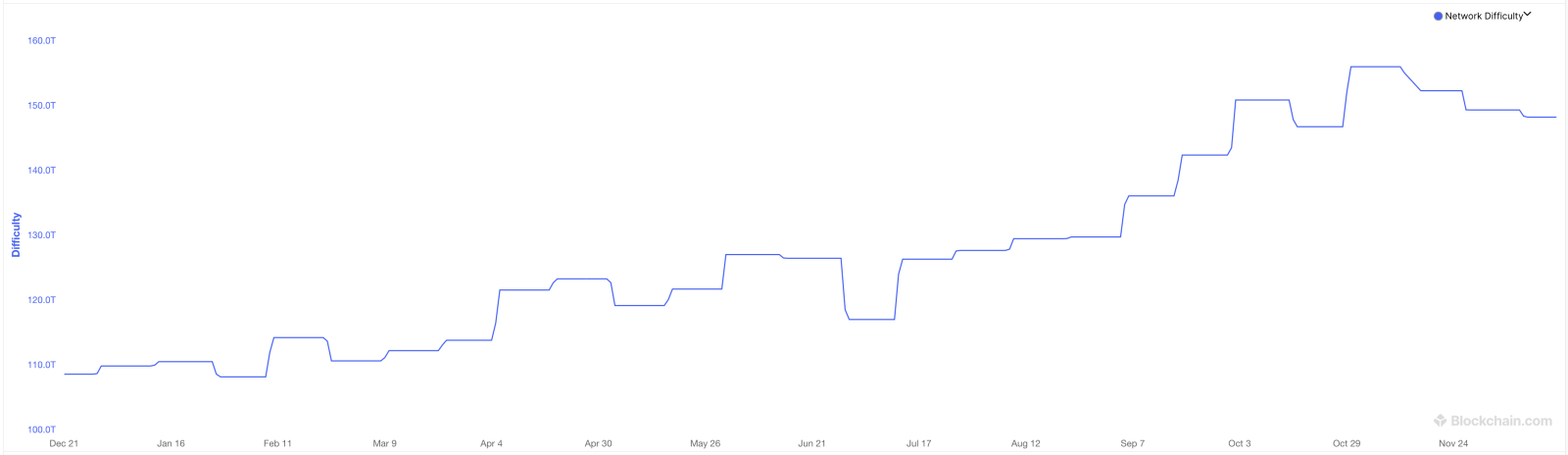
Source: Blockchain.com
Difficulty adjustment reflects changing hash rate dynamics
Bitcoin’s mining difficulty automatically recalibrates roughly every two weeks to maintain consistent block production. The latest adjustment follows a period in which hash rate growth slowed, easing pressure on mining operators after recent peaks.
Market participants note that difficulty reductions often coincide with transitions in miner behavior, including equipment optimization, operational consolidation, or short-term hash rate volatility.
Mining economics show signs of stabilization
Lower difficulty can temporarily improve mining economics by reducing competition for block rewards, particularly for operators with higher energy costs. Analysts say such periods often help rebalance the mining landscape, especially after phases of rapid expansion or stress.
While profitability remains sensitive to Bitcoin’s price and energy costs, recent difficulty movements suggest a more balanced environment compared with earlier periods of strain.
Hash rate remains historically elevated
Despite the recent adjustment, Bitcoin’s overall hash rate remains near historically high levels, underscoring continued long-term investment in mining infrastructure. This indicates that the network’s security has not been materially weakened, even as short-term conditions fluctuate.
Observers emphasize that temporary difficulty adjustments are a normal feature of Bitcoin’s design rather than a signal of structural change.
Network resilience remains intact
Mining difficulty adjustments play a central role in Bitcoin’s self-regulating mechanism, allowing the network to adapt to changing participation levels without external intervention.
For now, mining data points to a period of recalibration rather than disruption, as the network continues to operate within expected parameters.